Why Germany Became Famous for FKK Culture
FKK stands for Freikörperkultur, free body culture. Here's how a Swiss doctor's sunbath cure became Germany's national habit, and how its initials ended up over the door of sauna clubs.
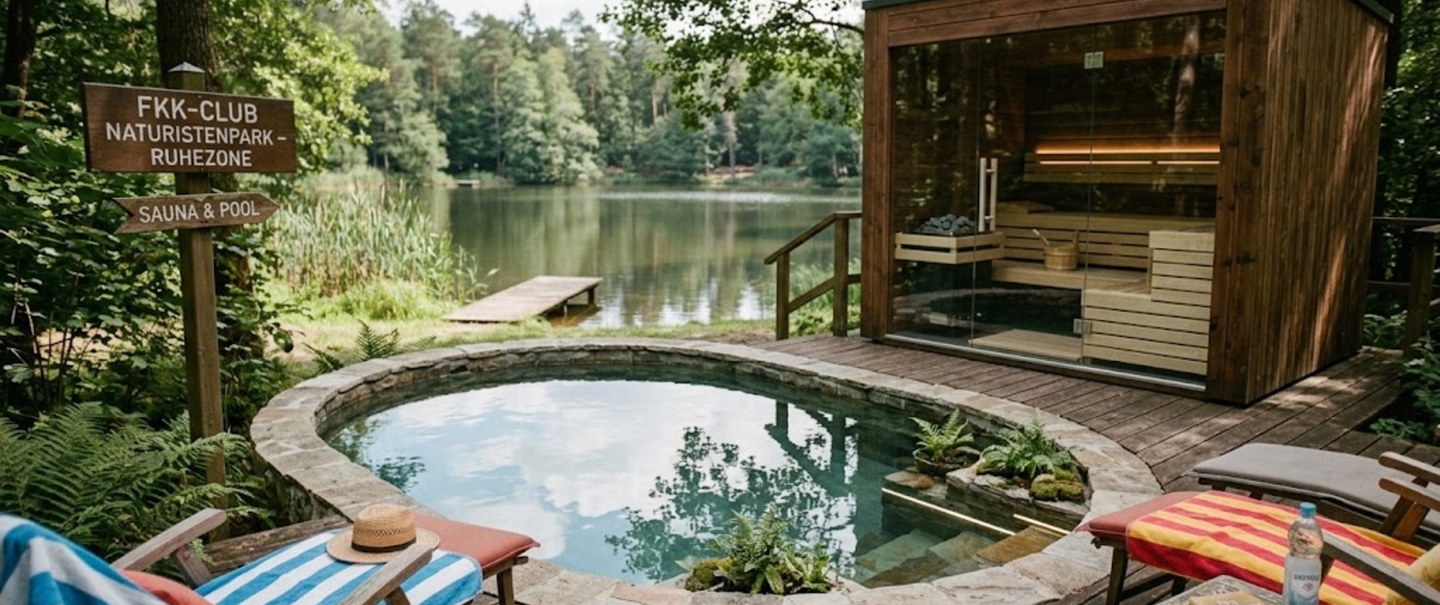
Spend any amount of time around German saunas, Baltic beaches, or the country's parks in high summer, and a question stops being rhetorical: why here? France has better beaches. Scandinavia is famously relaxed about the body. Yet Germany is the country where nudity turned itself into a movement, gave the movement a name, and has held onto that name for over a century. If you've wondered how one country got comfortable with that, the answer is a real story, and a better one than most travel guides give you.
The name is Freikörperkultur, which translates as "free body culture," and it is the reason the letters FKK mean anything at all outside Germany. Its story runs from Swiss doctors prescribing sunbaths in the 1850s, through a socialist federation with seventy thousand members, through a Nazi ban, a communist beach culture, and on to the strangest twist: a wellness ideal lending its initials to the country's adult sauna clubs. By the end of this piece you'll know where the word came from, what it stood for, and why it now sits over the door of places its founders would not recognize.
The dates below follow the standard English-language chronology, and if you want every one of them sourced, Wikipedia's entry on Freikörperkultur is the reference. What follows is the version you can read in one sitting, in order, with the answer to the question in the headline at the end.
What FKK actually means
Freikörperkultur, shortened to FKK, is the German tradition of non-sexual social nudity. The premise is simple: the naked body is not, in itself, a scandal, so swimming, hiking and sunbathing can happen without clothes and without ceremony. If you've ever typed "what does FKK mean" into a search bar, that's the answer you were looking for. German naturism comes with its own vocabulary: a textilfrei sauna is one where nobody wears a towel, an FKK-Strand is a designated nude beach, and the abbreviation shows up on signs all over the country.
The institutions are the part outsiders miss. FKK organized early, and it organized thoroughly: clubs, journals, congresses, doctors who prescribed it, lawyers who defended it. A habit that spreads informally can fade without a trace. A movement with statutes is a different animal, and that is part of why you can still find nudism in Germany organized, insured and defended today.
One boundary worth setting early, because it causes most of the confusion in English-language searches: FKK nudity is not eroticism. We take that tangle apart in detail, including what FKK clubs are and what they only look like, in our guide to the myths about German sauna clubs. Here, the tangle itself is the ending, not the beginning. (If you've seen the word spelled without the umlaut, freikorperkultur, that's the same word flattened for keyboards.)
It started as medicine, not ideology
You can trace the roots back to the late 1700s, when sending a patient outdoors counted as radical treatment. Lord Monboddo, a Scottish judge, took "air-baths" in the nude at home. Georg Christoph Lichtenberg made the German case for the practice in an essay called Das Luftbad, "the air bath." Neither man was starting a movement. They were arguing about health, and if that sounds modest, it's exactly why it worked.
The person who turned exposure into treatment was Arnold Rikli, a Swiss naturopath. In 1853 he opened a "solar sanatorium" and prescribed unclothed light baths, Lichtbäder, as part of a cure built on sun, air and water. His theory was his era's nature-cure medicine in miniature: modern life, spent indoors and overdressed, was making people ill, and the bare body in fresh air was the correction. If you'd fallen ill at the wrong moment in the 1850s, your doctor might have sent you outside without your clothes and called it medicine. Whether the theory survives scrutiny matters less than what it did. It gave nudity a prescription pad. By 1906, Germany had 105 air-bath sanatoriums operating.
Artists went further than the doctors. Karl Wilhelm Diefenbach, who lived from 1851 to 1913, practiced naturism openly with his students near Munich and later in Vienna, painting and wandering unclothed decades before any association existed to defend the practice. Doing that in the nineteenth century took a thicker skin than you'd need today.
That origin explains something you might otherwise find odd: how nudity could ever be organized at all. In Germany it arrived with a rationale attached and endorsements from people with titles, before anyone had to argue for it. That head start is one reason FKK culture on German beaches today looks so unbothered.
Lebensreform and the association in Essen
By the end of the nineteenth century, the therapy had found an ideology. Lebensreform, "life reform," gathered the era's back-to-nature impulses under one banner: reform your dress, your diet, your whole relationship with the industrial city. Naturism fit the program so neatly that it stopped being a medical eccentricity and became something you could join.
People joined it in an unexpected place. In 1898 the first official FKK association was founded in Essen, in the Ruhr, Germany's industrial heartland. Not a spa town, not a bohemian quarter: a coal-and-steel city full of workers whose bodies belonged to the factory shift. The choice makes sense once you look at it. The people with the least access to countryside and sunlight had the most obvious reasons to want both, and the association was how German civic life absorbed everything.
By around 1900, nude bathing was already popular in the countryside around Berlin and along the North Sea and Baltic coasts. Walk those shores in 1900 and you'd have found the habit already well established. A scattering of doctors, artists and enthusiasts now had a base, a program, and a country about to hand them the 1920s.
The Weimar boom
The 1920s turned a network into an institution. 1920 brought the first official nude beach, on the island of Sylt. In 1923 the associations merged into the Arbeitsgemeinschaft der Bünde deutscher Lichtkämpfer, the working group of German "light fighters." In 1925 the Berlin journal Leben und Sonne ("Life and Sun") began publishing. In 1926 the umbrella body renamed itself the Reichsverband für Freikörperkultur. The name that still defines the subject was now on the letterhead.
The movement split along political lines, and both halves grew. Adolf Koch ran nude physical-education schools through the socialist workers' sports culture from the 1920s onward. By 1932 the socialist Freie Menschen federation counted around 70,000 members. Picture what that meant: you could join a mass organization built on getting undressed, inside a functioning European democracy.
It went international too. In 1930, after a meeting in Frankfurt, the European League for Naturism was founded. The first naturist Olympic Games followed in August 1939, in Thielle, Switzerland. Draw up a list of Europe's most organized nude cultures that summer, and Germany heads it.
Then, within months, the state came for it at home.
The Nazi ban, and the compromise nobody likes
The break came faster than you'd think. On 3 March 1933, weeks after Hitler took power, the Prussian Ministry of the Interior issued a circular ordering the nudist movement suppressed. The associations' world closed in almost overnight.
The compromise came nine years later. On 10 July 1942 a Reich ordinance relaxed the ban: nudity was permitted, provided nobody had to see it. Private and enclosed, legal. Publicly displayed, not. If you'd been caught in the wrong spot, your exposure depended on who could see you. That formula outlived the Reich that wrote it, staying the working rule in West Germany into the 1960s and in the East until 1990.
The era's most uncomfortable figure is Hans Surén, who was co-opted by the regime, which had a use for his vision of the trained bare body, and who was later made an honorary member of the DFK, the movement's own postwar federation. That last part is worth not hiding. Spektrum der Wissenschaft's history of Freikörperkultur traces how the movement's health ideal tangled with the era's body-political currents. The honest summary is that the record between 1933 and 1945 is neither pure resistance nor full collaboration, and the parts hardest to defend are the parts the federation honored longest.
The war was not kind to the movement's institutions. The 1942 formula survived them, and in 1945 both German states inherited it. What happened next is the clearest lesson in the whole story, and you can watch it run in opposite directions on either side of a border.
Divided Germany, and why the East went further
In the West, the Deutscher Verband für Freikörperkultur was founded in 1949, rebuilding the old club structure. The "legal if unseen" rule held into the 1960s before giving way to something more open. Kampen, on Sylt, became famous well beyond Germany through media coverage of its nude beach, and German holidaymakers carried the habit to naturist resorts in Yugoslavia, France and along the Baltic. If you holidayed on the Adriatic in the 1970s, you were probably sharing a beach with them.
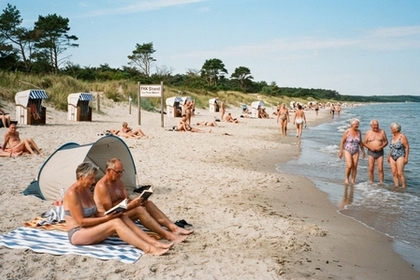
The East is the real story. In the GDR, FKK became mainstream. Beaches ran mixed, nudists and clothed bathers side by side on the same sand, without zones and without fuss. Attempts to restrict the practice in the 1950s failed, and the state settled into tolerating an afternoon naked on the Baltic as one of the few pleasures it could not usefully police. The 1942 wording stayed formally on the books until 1990, which tells you how little anyone was enforcing it.
By the time the border opened, nudity in Germany meant two different things in the two Germanies, and the East's version was the more relaxed one. If you picture a German nude beach today, you're probably picturing that East German normality.
After the wall: the slow fade
Reunification put the East's ease in front of the whole country. What has changed since is the appetite. Deutsche Welle's English explainer on the nudism movement is blunt about it: FKK is dwindling among younger Germans. Why, exactly, is not settled. Fewer people join organized anything, and a generation raised on curated images may be warier of uncurated bodies; treat those as the plausible explanations rather than proven ones. You don't need to accept any of that to see the trend, and the trend is why this history is worth writing down now.
The whole arc in eleven dates
- 1853: Arnold Rikli opens his solar sanatorium and prescribes unclothed light baths.
- 1898: the first official FKK association is founded in Essen.
- 1906: 105 air-bath sanatoriums are operating in Germany.
- 1920: the first official nude beach opens on Sylt.
- 1926: the umbrella body becomes the Reichsverband für Freikörperkultur.
- 1932: the socialist Freie Menschen federation counts around 70,000 members.
- 3 March 1933: the Prussian interior ministry orders the nudist movement suppressed.
- 10 July 1942: a Reich ordinance permits nudity, provided nobody has to see it.
- 1949: the DFK is founded in the West.
- 1950s: GDR attempts to restrict FKK fail; East German beach culture turns mixed.
- 1990: the GDR ends, and with it the East's version of the 1942 rule.
So why Germany, and not France or Scandinavia?
Assemble the pieces and the headline question is less mysterious than it looks.
Germany industrialized early and hard. That produced both the sickness the nature-cure doctors claimed to treat and the crowded urban audience that wanted sun, air and a reason to get out of the factory. Lebensreform gave the impulse an ideology, and German civic life gave it a container: the association. By 1898 nudity had a club with statutes in a coal city. By 1926 it had a national federation, a name and a journal. France came at it differently: its first naturist holiday resorts, including the Centre-Hélio-Marin at Montalivet, opened around 1950 as a product for holidaymakers, not a movement for daily life. Scandinavia is easygoing about the body, but that ease never organized itself into a named, century-old institution you can point to.
Our read, and it is a read rather than a documented formula, is that a specific combination did it: industrial misery, a medical fashion that endorsed undressing, and a society unmatched at founding clubs. History did the rest. A divided country meant at least one German state had every incentive to leave its citizens one unpoliced pleasure, and the East, where the churches' hold was weaker and the state's tolerance was pragmatic, normalized FKK on a scale the West's associations never reached. If you want the one-line answer: Germany made nudity organized, and then it made nudity normal.
How a health movement's name ended up on sauna clubs
Now the part you came for, and the part no encyclopedia will cover, because it is not their beat.
For most of the twentieth century, FKK meant what it said: naked, non-sexual, healthy. Then the word drifted, and the meaning of FKK stopped being stable. If you've only ever met the word through the adult sense, this is where the two histories collide. Today, in English and increasingly in German usage, "FKK club" or "sauna club" means a licensed adult venue, a brothel built inside a wellness spa, where guests pay an entry fee, wear a robe, and negotiate separately with the women working there. At least one academic has gone as far as calling FKK "a euphemism for prostitution."
Nobody recorded the moment the two meanings crossed, which tells you something about how quiet the shift was. The plausible story goes like this: Germany is a country where nudity is unremarkable and wellness is licensed, so a venue selling sex in a wellness costume reached for the one word that sounded established, hygienic and legal. FKK had spent a century making Germans comfortable with the naked body. The clubs borrowed the comfort along with the letters.
The movement's descendants are not flattered. For the DFK and the people who still sunbathe on the Baltic, the initials mean volleyball without clothes and a philosophy of body acceptance. The adult venues wearing the same letters are, from where they stand, an irritation they cannot legally stop. Ask a committed German naturist about it and you'll find the sore spot. Both uses are real. They share a word and not much else.
We cover the adult side of the collision, what these venues actually are, what they cost and what happens inside, in our complete guide to FKK clubs in Germany. But the history explains the sign you see on the door. When Germany became famous for Freikörperkultur, it was famous for taking the body out of the shame category. The sauna clubs are what happened when somebody worked out that the same comfort could be sold twice.
The bottom line
Germany became famous for Freikörperkultur because it industrialized early, reacted with a doctor-approved back-to-nature movement, and then did the thing neither France nor Scandinavia did: it organized. Clubs gave nudity statutes, journals gave it a voice, a federation gave it a name, and a divided century let one half of the country make the whole thing ordinary. What you see on a German beach, or over the door of a sauna club, is the residue of those hundred-odd years.
If you take one date from the eleven above, take 1898. That is when the movement got its first official association, in Essen, and the point from which FKK's long public life is usually counted. The roots run deeper, back to the light-bath doctors of the 1850s, and the chapter you're most likely to meet as a visitor was still a century away.
 Countries Where Brothels Are Legal (2026 Guide)
Brothels are legal in fewer places than most people think. See where, what 'legal' means in each country, and what changed in 2026.
1 week ago
Blog
Countries Where Brothels Are Legal (2026 Guide)
Brothels are legal in fewer places than most people think. See where, what 'legal' means in each country, and what changed in 2026.
1 week ago
Blog
 Why Germany Became Famous for FKK Culture
FKK means Freikörperkultur, free body culture. How a 1795 essay, Weimar clubs, and the GDR made Germany famous for nudism.
2 weeks ago
Blog
Why Germany Became Famous for FKK Culture
FKK means Freikörperkultur, free body culture. How a 1795 essay, Weimar clubs, and the GDR made Germany famous for nudism.
2 weeks ago
Blog
 Which Adult Entertainment Experience Would You Choose? A Look at 5 Different Options
Strip club, swinger club, FKK spa, brothel or escort: what each is actually like, what it costs, and which one suits your first night out.
3 weeks ago
Blog
Which Adult Entertainment Experience Would You Choose? A Look at 5 Different Options
Strip club, swinger club, FKK spa, brothel or escort: what each is actually like, what it costs, and which one suits your first night out.
3 weeks ago
Blog
 Things You Probably Didn't Know About FKK Clubs
Who pays whom inside a German FKK sauna club, why Berlin apologized to a brothel, and the house rules nobody warns you about.
4 weeks ago
Blog
Things You Probably Didn't Know About FKK Clubs
Who pays whom inside a German FKK sauna club, why Berlin apologized to a brothel, and the house rules nobody warns you about.
4 weeks ago
Blog
 Strip Club Reviews: How to Spot Fakes & Pick a Great Club
A 4.9 built on six reviews is not better than a 3.1 built on forty-one. Learn the fake-review tells, why the 3-star reviews are the honest ones, and the five-minute check that picks your club before you pay the cover.
1 month ago
Blog
Strip Club Reviews: How to Spot Fakes & Pick a Great Club
A 4.9 built on six reviews is not better than a 3.1 built on forty-one. Learn the fake-review tells, why the 3-star reviews are the honest ones, and the five-minute check that picks your club before you pay the cover.
1 month ago
Blog
 Common Myths About FKK Clubs (And What German Sauna Clubs Are Really Like)
Half the internet thinks FKK clubs are nudist spas. The other half thinks they're illegal. Neither is right. Ten myths about German sauna clubs, checked against the law, the operators' own price pages, and what the women working there actually say.
2 months ago
Blog
Common Myths About FKK Clubs (And What German Sauna Clubs Are Really Like)
Half the internet thinks FKK clubs are nudist spas. The other half thinks they're illegal. Neither is right. Ten myths about German sauna clubs, checked against the law, the operators' own price pages, and what the women working there actually say.
2 months ago
Blog
 10 Myths About Brothels That Aren't True
Ten brothel myths, checked against actual law rather than slogan. Where they're legal, who really visits, what workers keep, and why you'll never find a posted price. With the parts that are true.
2 months ago
Blog
10 Myths About Brothels That Aren't True
Ten brothel myths, checked against actual law rather than slogan. Where they're legal, who really visits, what workers keep, and why you'll never find a posted price. With the parts that are true.
2 months ago
Blog
 7 Escort Agency Booking Mistakes First-Time Clients Make (And How to Avoid Them)
Most first-timers don't lose money on escort agency bookings because of bad luck - they skip the vetting, send the wrong first message, or pay a "deposit" in gift cards. Here are the seven mistakes that actually cost people money, and the fix for each.
3 months ago
Blog
7 Escort Agency Booking Mistakes First-Time Clients Make (And How to Avoid Them)
Most first-timers don't lose money on escort agency bookings because of bad luck - they skip the vetting, send the wrong first message, or pay a "deposit" in gift cards. Here are the seven mistakes that actually cost people money, and the fix for each.
3 months ago
Blog
 Europe Sex Guide: Best Cities for Adult Nightlife 2026
15 European sex capitals, fact-checked for 2026: what's legal, what a night really costs, and which famous spots are tourist traps.
3 months ago
Blog
Europe Sex Guide: Best Cities for Adult Nightlife 2026
15 European sex capitals, fact-checked for 2026: what's legal, what a night really costs, and which famous spots are tourist traps.
3 months ago
Blog
 What Couples Need to Know Before Visiting a Swinger Club
Thinking about visiting a swinger club as a couple but not sure what you're actually walking into? This is the honest, no-judgment guide we wish every couple had before their first night - the conversation to have beforehand, how to set boundaries you'll both hold, the etiquette nobody explains out loud, and what the night really feels like.
3 months ago
Blog
What Couples Need to Know Before Visiting a Swinger Club
Thinking about visiting a swinger club as a couple but not sure what you're actually walking into? This is the honest, no-judgment guide we wish every couple had before their first night - the conversation to have beforehand, how to set boundaries you'll both hold, the etiquette nobody explains out loud, and what the night really feels like.
3 months ago
Blog