Things You Probably Didn't Know About FKK Clubs
Who pays whom inside a German FKK sauna club, why Berlin apologized to a brothel, and the house rules nobody warns you about.
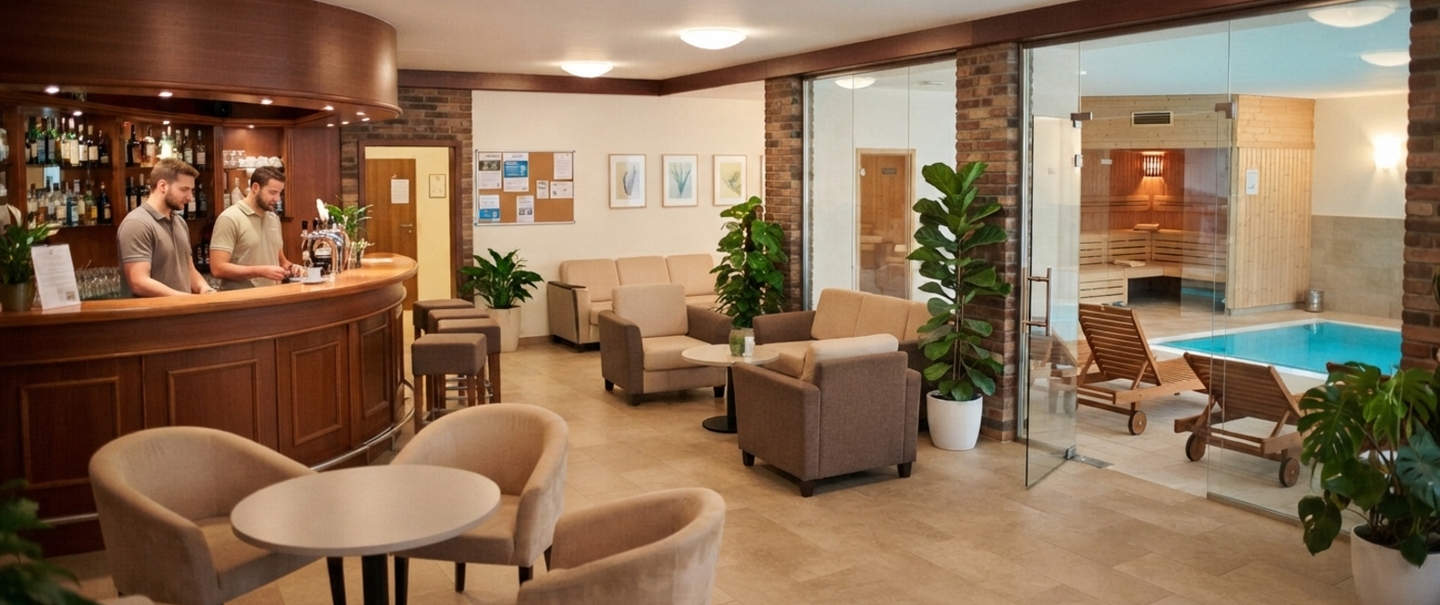
Everybody has heard of German sauna clubs. Almost nobody knows how the machine actually works. The average visitor walks in with a mental model borrowed from a strip club or a spa, and both models are wrong in expensive ways. I've spent more time than I'd like to admit reading German tax law, police reports and club price lists about this industry, and the strangest part is not what happens behind the doors. It's the plumbing. Who pays whom. Why a city government ended up apologizing to a brothel. Why your birthday is worth a free ticket at a club in Cologne. If you want the listings first, our FKK club directory has every venue we rate, and the facts below are the stuff that never makes it onto a club's own website.
What does FKK actually mean?
Quickly, because it matters less than you think. FKK stands for Freikörperkultur, literally "free body culture," the German nudist movement that predates every club on this page by decades. The clubs borrowed the initials, not the philosophy, and the gap between the two is where most of the confusion lives. If you want the real story, how a doctor's sunbath cure turned into a national habit and how the initials ended up over the door of sauna clubs, our history of German FKK culture covers the whole arc. If you read one mainstream piece about the culture side, make it the BBC's feature on why Germans love getting naked in public; it explains the spa half of the habit better than any club website will.
The women aren't employees. They're paying customers too.
Here is the fact that breaks most people's brains: in a German FKK club, the women pay to be there.
They're self-employed, not staff. A woman working the floor checks in at reception much the way you do and pays the club a daily fee that typically runs between €50 and €85. It's €85 at FKK Leipzig and around €55 at the Van Goch club near the Dutch border. Every euro a client then pays her, she keeps. The club's revenue comes from somewhere else entirely: your entry fee, the buffet, the bar tab.
Once you understand that, half the weirdness of these places snaps into focus. The club has no reason to push anyone at you, because it earns the same whether you spend the night talking to ten women or to nobody. The woman who turns you down is not rejecting you on the club's behalf. She is a business owner deciding how to use her working day, which is a very different conversation. And the relaxed, unpressured atmosphere regulars always mention? It's not good manners. It's incentives.
A practical consequence for you: nobody is working on commission for the house, so there is nobody whose job is to upsell you the moment you look friendly. If you're new and slightly terrified, that's genuinely good news. The women know the social code of the place cold, most of them have seen a thousand nervous first-timers, and a polite hello costs you nothing because nobody has a manager counting their approaches. Just don't confuse friendly with available. Both exist in the room, and telling them apart is your job, not the club's.
The tax office has had a flat rate for this industry since 1966
Germany loves a bureaucratic shortcut, and the FKK scene has one of the best ones anywhere. It's called the Düsseldorfer Verfahren, the Düsseldorf procedure, and it has been running since 1966, which makes it older than most of the clubs it covers, and very possibly older than you.
The arrangement is simple. The club operator collects a flat €5 to €30 per working woman per day and hands it to the tax office as an advance on her income tax and VAT. That's the whole system. Dead Tuesday or packed Saturday, the state gets its modest daily envelope up front and the woman settles the rest through normal filing like any other freelancer. No revenue agency has to estimate anything, no club has to invoice anything, and if you run the club your whole compliance burden fits on a postcard.
Read that year again: 1966. West Germany built a working tax framework for this business while most countries were still pretending it did not exist. Coming from anywhere with more combative paperwork, it reads like science fiction, and it explains a lot about why the German scene grew so large so calmly.
Berlin's most famous fkk sauna club got a formal apology, and €250,000
In April 2016, around 900 police, customs and tax officers raided Artemis, the giant wellness club next to the Kurfürstendamm in Berlin. Nine hundred officers. For scale, that's a military-grade operation aimed at a single building with a pool, three saunas and two cinemas, and it's not the kind of morning you shrug off if you own the building.
The case then quietly collapsed. Charges fell apart by 2018, and the courts started ruling against the state instead: a Berlin administrative court found the city "culpably in breach of official duties" and ordered €100,000 in damages. In June 2023, the city settled the second lawsuit, paid the operators €250,000 in compensation and issued a formal apology. Yes, you read that right: a German city government formally apologized to a sauna club.
It keeps getting stranger. Reporting based on the EU state-aid database found the club received at least €1.75 million in COVID business aid, which went over exactly as you would expect in a country where sex workers themselves had been excluded from aid programs. In 2024, after years of rejected building plans, Artemis sued over the warehouse across the street and won the right to convert it into 32 additional rooms. In 2025 the operators donated €350,000 to a Berlin children's hospital. The venue itself is a monster: roughly 3,000 square meters, capacity for 600 guests, entry around €80 to €90 with food included, and customers who reportedly spend about €25 million a year inside it. The Wikipedia page for Artemis reads like a corporate saga at this point, complete with a mythology dispute over whether naming a brothel after a virgin goddess was a good idea.
Another club king ended up in prison
This next one gets no jokes, because there's nothing funny in it for anyone involved.
FKK Paradise near Stuttgart was promoted as Germany's cleanest and fairest club, a flagship for the respectable face of the industry. In 2014, about 1,000 officers raided it. In February 2019, the owner Jürgen Rudloff was sentenced to five years in prison for aiding human trafficking, and the club's marketing chief Michael Beretin received three years and three months. The Guardian's longread on Rudloff is the best single account of how that rise and fall actually played out, and it's worth your time precisely because it does not flatter anyone involved. Whatever the marketing promised, the verdict is the fact, and any honest picture of this industry has to hold both things at once.
Germany's biggest club has treehouses
FKK World, near Giessen in Hesse, sits on roughly 50,000 square meters of grounds. Treehouses. A volleyball court. An outdoor pool. In summer the place runs less like a sauna club and more like a naturist festival with a dress code of nothing, and the "sex party in the forest" reputation isn't something we invented for this paragraph. Sources disagree on the exact measurements, but the claim of the largest grounds in the scene gets reported consistently enough that I'm comfortable repeating it.
If your mental image of this industry is a dark basement behind a car park, a forest with treehouses in central Hesse should fix that permanently.
There are fewer clubs than the internet claims
You've probably seen the figure "500+ FKK clubs in Germany" on a dozen sites. German Wikipedia currently counts around 156 FKK and Kontaktsauna venues. The honest version is that estimates range from about 150 to 500+ depending on who is counting, because nobody agrees on what counts. Some lists include every nudist sauna in the country, some count only full-service clubs, and most lists simply copy each other and call it research. The truth you can plan a trip around: there are dozens of serious venues, they cluster along the Rhine and around Frankfurt, Berlin and the Ruhr, and no list you read is perfectly current.
The model traveled, though, which tells you the format is exportable well beyond the country that invented it. German Wikipedia counts roughly 33 sauna clubs in Switzerland and about 15 in Austria. Germany invented the format, and its neighbors bought the franchise without needing to be asked twice.
For planning purposes, ignore the big number and work from cities instead. Pick the region, check which venues cluster within an hour of it, and read the recent reviews, because clubs close and reopen under new names often enough that a two-year-old listicle is already lying to you.
House rules nobody warns you about
Most of the trouble first-timers run into comes from house rules, not from anything the brothel signs say. These are the fkk club rules that actually have teeth.
Your phone stays in the locker. Not face down on the table, not for "just one photo of the pool." Some clubs go further and stick an opaque sticker over your camera lens at check-in, and they won't apologize for it. Every woman in the building is running her own business and has zero interest in ending up in your camera roll, so this is the one rule that gets enforced without discussion.
Street clothes are forbidden past the locker room. Towels are mandatory on every sauna surface, because the next person to sit where you sat didn't consent to your skin. Shower before you enter the sauna areas, every time. And here is the one that surprises people most: at many clubs, walking around fully dressed makes you more conspicuous than walking around naked. You came to a place built on one specific social contract. Wearing your jeans into it announces that you didn't read it.
Our complete guide to FKK clubs in Germany walks through first-timer etiquette properly, including what actually happens at reception and what the entry fee gets you.
Your birthday is a free ticket
As of 2026, several clubs comp your entry on your birthday if you show ID: Samya in Cologne, Venus in Hamminkeln, Flamingo in Karlsruhe, Cancun in Ingolstadt. Peaches in Rheinbach goes further and throws in a bottle of vodka, which is either a generous gesture or a liability lawyer's worst dream depending on how you look at it. Promotions like these change without much warning, so check a club's specials page before you build an entire birthday trip around a free door.
Why would a club give away the door on the one day you're guaranteed to be in a partying mood? Because the promotion is rarely really about you. A birthday comp usually comes with conditions tucked in the fine print, a weekday only, or valid only with a second paying guest, because clubs use it to pull traffic onto their dead days. Read the terms before you assume you have found a loophole.
Still, there's something beautifully German about this being the one nightlife category where getting older works in your favor.
At some clubs, women and couples get in free
Some venues flip the pricing model entirely. At Anni Porsche in Berlin, women and couples enter free while men pay €98 to €118. Harem in Paderborn runs couples-free Thursdays.
The economics are cleaner than they look once you remember fact one: the women already pay the club their daily fee, so letting them through the door for free costs the club nothing and stocks the floor that the paying men came for. Couples get waved in because a couple is, from the club's point of view, two customers for one handshake, and a female guest changes the ratio of the floor in a way no marketing budget can buy. If that sounds cynical, remember that you're reading a pricing page. Everything in this business is the pricing page. We compared the best FKK clubs in Berlin side by side with entry prices included, and it's the fastest way to see how differently venues price the same night.
German TV moved into a club for a season
In 2025, the channel RTLZWEI aired "Deutschland bei Nacht," a documentary series produced with Spiegel TV, and instead of narrating over stock footage the crew filmed an entire season inside FKK Van Goch, a club in the small town of Goch near the Dutch border. The place is run by its longtime owner Ulla, who is in her sixties and treats the club like the family business it is. Entry costs €35 for men and €55 for women, which tells you immediately that it's not playing in Artemis's price league.
If your German is passable, watch it. You'll learn more about how these venues actually breathe, the cleaning shifts, the regulars, the economics of a small-town club, than any travel guide can teach you, which is exactly why a national channel sent a film crew instead of a reporter.
Prices are fixed, and haggling breaks the founding rules
Ask longtime regulars about the scene's founding rules from the 1990s and you'll hear a list that sounds like a parody and is not: prices are fixed and haggling is out, women do not approach men, premises stay well lit, and the purists insist there were no bathrobes. Treat that as scene lore rather than law, because nobody ever filed it anywhere, but the fixed-price culture it describes is real and still shapes how the whole market works. You'll notice it the moment you arrive: posted prices at reception, posted prices on the bar menu, and a number quoted by a woman that means the number she said. It's one of the least stressful parts of the experience, and it survives because everybody in the building benefits from it staying that way.
That culture connects to the one pricing term you'll keep bumping into: the Pauschalclub, the all-inclusive format where one entry price theoretically covers everything. It exists, it's real, and our guide explains how it works before you find out at the till.
When to go
Most clubs run from late morning until 4 or 5 in the morning, every day. Weekday daytime is the quiet shift: more space, more actual conversation, staff with time to explain the drill to you. Friday and Saturday nights are the show, packed and louder and pricier, with entry at FKK Sharks in Darmstadt jumping from €50 midweek to €69 on weekends. Sharks is a good size reference for the big end of the market: about 7,000 square meters between indoor and outdoor areas and capacity for roughly 400 guests, open until 5 a.m. on weekends. That's not an outlier. The serious venues around Frankfurt and the Rhine all run at that scale, which is why showing up at midnight on a Saturday feels very different from showing up at 2 p.m. on a Wednesday. Some clubs sell two-hour tickets and run late-night discounts, which matters if a full twelve-hour session sounds like too much of a good thing rather than exactly enough of it.
My honest advice: go once on a Tuesday afternoon to learn how the place works, then decide whether you want the Saturday version of it.
Quick answers about the fkk sauna club
You check in, pay entry, which lands anywhere from €35 to over €100 depending on venue and day of the week, lock everything away, shower, and walk into a naked spa with a bar. The women working there have paid their own daily fee and make their own arrangements with clients directly; the club takes no cut of that. Past that point everything varies by venue. Some clubs lean spa, some lean nightclub, and the best ones manage both at once.
In the sauna and pool areas, yes, that's the deal and it gets enforced. Most clubs let you keep a towel or a robe for moving between areas, though purist venues frown on the robe. Street clothes past the locker room are against the rules nearly everywhere, and the staff will tell you so before you finish your first lap.
No. Phones belong in your locker, and some clubs sticker your camera lens for good measure. This is the rule with the least forgiveness attached to it. Argue with the sticker and you'll meet the door.
Final thoughts: so that's the machine
Strip away the mythology and the German sauna club is a strange, stubbornly practical business. The workers are tenants. The taxman takes a flat daily envelope and has done since the sixties. A city government once ended up on the apologizing side of a lawsuit against a brothel, and the biggest venue in the country solved the atmosphere problem with treehouses. None of it is what you'd expect, and all of it is verifiable, which is more than most industries can say.
The trivia version of this industry is entertaining. The working version of it is one of the most regulated adult markets on earth, and knowing the difference is what separates a good first visit from a confusing one.
Now that you know how the plumbing works, the fun part is picking a venue. The directory has the listings, the guide has the first-visit drill, and your phone has a locker waiting for it at the door. That last part is the only rule you'll regret learning the hard way.
 Countries Where Brothels Are Legal (2026 Guide)
Brothels are legal in fewer places than most people think. See where, what 'legal' means in each country, and what changed in 2026.
1 week ago
Blog
 Why Germany Became Famous for FKK Culture
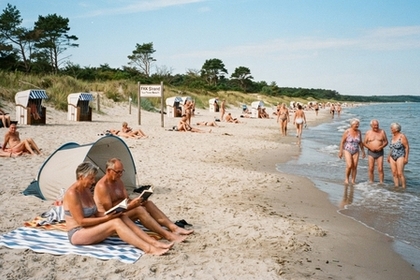
FKK means Freikörperkultur, free body culture. How a 1795 essay, Weimar clubs, and the GDR made Germany famous for nudism.
2 weeks ago
Blog
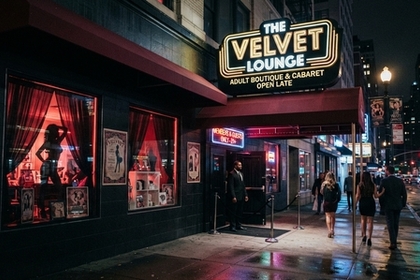 Which Adult Entertainment Experience Would You Choose? A Look at 5 Different Options
Strip club, swinger club, FKK spa, brothel or escort: what each is actually like, what it costs, and which one suits your first night out.
3 weeks ago
Blog
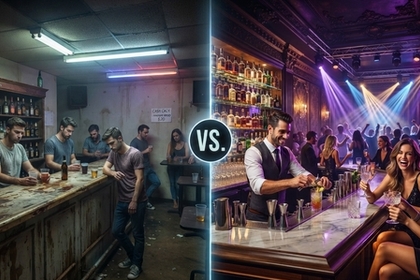 Strip Club Reviews: How to Spot Fakes & Pick a Great Club
A 4.9 built on six reviews is not better than a 3.1 built on forty-one. Learn the fake-review tells, why the 3-star reviews are the honest ones, and the five-minute check that picks your club before you pay the cover.
1 month ago
Blog
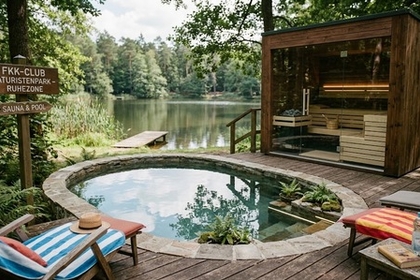 Why Germany Became Famous for FKK Culture
FKK stands for Freikörperkultur, free body culture. Here's how a Swiss doctor's sunbath cure became Germany's national habit, and how its initials ended up over the door of sauna clubs.
1 month ago
Blog
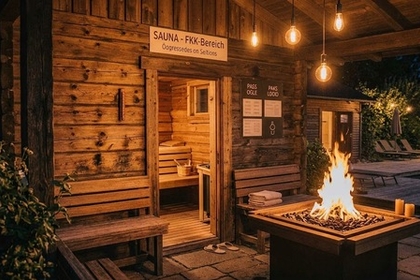 Common Myths About FKK Clubs (And What German Sauna Clubs Are Really Like)
Half the internet thinks FKK clubs are nudist spas. The other half thinks they're illegal. Neither is right. Ten myths about German sauna clubs, checked against the law, the operators' own price pages, and what the women working there actually say.
2 months ago
Blog
 10 Myths About Brothels That Aren't True
Ten brothel myths, checked against actual law rather than slogan. Where they're legal, who really visits, what workers keep, and why you'll never find a posted price. With the parts that are true.
2 months ago
Blog
 7 Escort Agency Booking Mistakes First-Time Clients Make (And How to Avoid Them)
Most first-timers don't lose money on escort agency bookings because of bad luck - they skip the vetting, send the wrong first message, or pay a "deposit" in gift cards. Here are the seven mistakes that actually cost people money, and the fix for each.
3 months ago
Blog
 Europe Sex Guide: Best Cities for Adult Nightlife 2026
15 European sex capitals, fact-checked for 2026: what's legal, what a night really costs, and which famous spots are tourist traps.
3 months ago
Blog
 What Couples Need to Know Before Visiting a Swinger Club
Thinking about visiting a swinger club as a couple but not sure what you're actually walking into? This is the honest, no-judgment guide we wish every couple had before their first night - the conversation to have beforehand, how to set boundaries you'll both hold, the etiquette nobody explains out loud, and what the night really feels like.
3 months ago
Blog