A Beginner's Guide to BDSM Clubs
Curious about BDSM clubs but no idea what to expect? Your honest first-timer's guide: real prices, dress codes, consent rules, and what really happens inside.
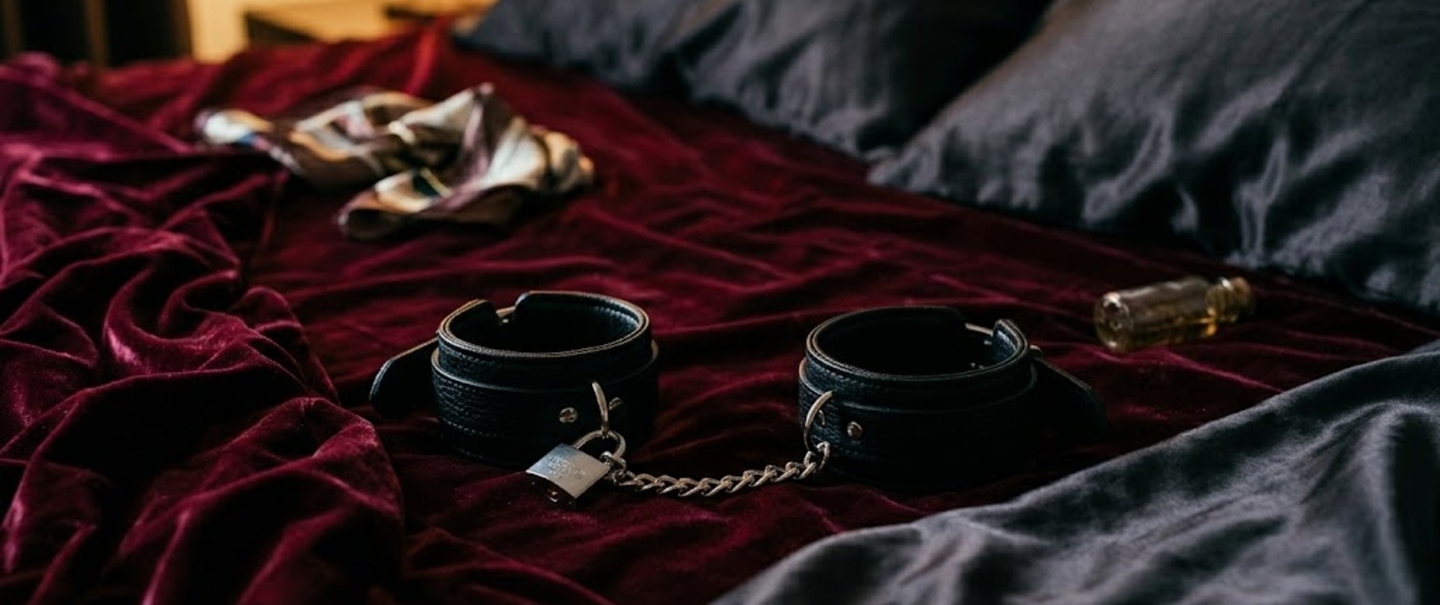
The first thing you notice isn't the equipment. It's that the bar area looks almost exactly like any other bar, except maybe there's a woman in a latex corset laughing with a guy in a leather harness about something that happened on the train. The conversation is completely normal. Nobody is being dramatic. You order a drink and realize you've been holding your breath since the door.
That's how it actually starts. Not with a dungeon monitor appearing to hand you a rulebook, not with a dramatic reveal of wall-to-wall chains, just people, standing around, being human.
If you've been curious about BDSM clubs but hesitated because you had no idea what actually happens inside, you're not alone. Most guides skip straight to "here's a list of equipment" and never answer the question you're actually asking: what is it like to be there for the first time? This one does.
What a BDSM Club Actually Is, And How It Differs from a Swinger Club
A BDSM club (also called a dungeon, kink club, or fetish club) is a space built around the practice of BDSM: bondage, discipline, dominance, submission, sadism, and masochism. The defining feature is the play space, a dedicated dungeon with purpose-built equipment, and a culture organized around consent, negotiation, and power exchange.
Here's the distinction beginners get wrong: a kink club is about what you do, not who you do it with. You might spend an entire evening being tied to a wooden frame while someone practices rope bondage, with no sexual contact at all. That's a complete, finished experience in this world.
A swinger club is opposite in focus. It's about who you do it with, partner exchange, group sex, new sexual connections. The equipment is beds and private rooms, not St. Andrew's crosses. Swinger clubs have their own culture and entirely different entry rules - if that's more your direction, SexAdvisor's swinger club guide covers it properly.
There's overlap, and some venues blur the line deliberately. KitKatClub in Berlin is technically a fetish club, but sexual activity in certain areas is completely expected. Many US BDSM clubs prohibit explicit sex altogether, partly community culture, partly liquor licensing law. In Europe the distinction is fuzzier; in American private member clubs it tends to be sharper.
The working rule: if you show up to a kink club expecting the premise to be sex, you may be surprised. Show up expecting exploration, power, sensation, and community, and you're in the right place.
How to Find One Without Feeling Weird About It
FetLife is the starting point. It's the dominant social platform for the BDSM and kink community worldwide, think Facebook, except the "About Me" section has a space for your kink role and you can join groups like "Chicago Rope Lovers" without anyone raising an eyebrow. The Events section lets you search by city and filter by type.
But before you RSVP to a private dungeon event, go to a munch first.
A munch is a casual community meetup in a public venue, a bar, a cafe, sometimes a restaurant. There's no play. No dress code. No equipment. Just kink-positive people having food and conversation. It's how almost everyone enters this community, and for good reason: it lets you meet the organizers and regulars before you commit to a private event somewhere. You get to assess whether a community feels welcoming, ask basic questions without embarrassment, and decide whether you trust the people running things.
Find munches on FetLife (search "munch" near your city), or on Reddit, r/BDSMcommunity and local city subs like r/BDSMChicago are active and community-vetted.
When you're ready to step into a private event, vet it before you go. Every legitimate club publishes its rules and code of conduct. Read them. Check the organizer's FetLife profile, how long have they been in the community? What do their references say? Ask in local groups. The best private clubs (The Crucible in DC, R.A.C.K. Room in Denver) require applications and vetting interviews. That's not exclusivity for its own sake, it's how they keep the environment safe.
Red flags to watch for: no posted rules, an organizer who pushes for private meetings before any group event, no mention of dungeon monitors, or anyone dismissive about consent ("we're all adults here" is a phrase that should make you leave).
What It Actually Costs
This is the section most guides skip entirely, which means beginners show up underprepared. Here's the honest breakdown across the full spectrum.
The free entry point, munches: Nothing. You pay for your own food and drink at whatever public venue is hosting. This is the universal on-ramp, and there's no faster way to meet the community.
Community dungeons: These are member-operated private clubs, often in mid-sized American cities. Annual memberships typically run $20-$100 per person, with per-event door fees of $10-$65. Two examples from current verified pricing:
| Venue | Membership | Event Entry |
|---|---|---|
| The Crucible, Washington DC | $40/yr (rising to $50 from July 2026) | $25 members / $35 non-members |
| R.A.C.K. Room, Denver CO | $10/mo or $60-$100/yr | $25/event (basic members) |
The Crucible runs a dedicated intro event called Dungeon 101 specifically for newcomers, $35 for non-members. If you're DC-based, that's a sensible first step.
Mid-range US play parties
Private events in major cities (NYC, LA, Chicago) typically run $30-$65 per person. Pandora's Box in Chelsea, NYC charges around $60 RSVP / $80 at the door for submissives, and $80 RSVP / $120 for couples.
Premium European fetish nights
KitKatClub Berlin runs approximately €20-25 (about $22-$27) at the door depending on the night. Lab.oratory, the men-only fetish club inside the Berghain complex, runs €14-19 (about $15-$21). Torture Garden, London's iconic monthly fetish event, sells tickets for £31-36.50 (about $38-$45), and roughly 95% sell out in advance via the Dice app, so pre-booking is essentially required.
The exclusive end
SNCTM, the private erotic masquerade club with events in LA and NYC, starts its membership at approximately $12,500/yr and goes up to around $125,000/yr at the top tier. Non-member single event tickets (for approved applicants) have been reported in the $500-$9,000+ range. You're not going there your first time, but it illustrates the full spectrum.
The Single-Male Price Premium, What Nobody Warns You About
If you're a single man attending a US BDSM event or play party, you will pay significantly more than anyone else. This is industry-wide, not a quirk of individual clubs.
| Ticket Type | Typical US Range |
|---|---|
| Single female | $0-$40 (often free) |
| Couple | $60-$150 total |
| Single male | $60-$200+ |
A real example from an East Coast Kinksters event in Pennsylvania: single females paid $40 at the door, couples paid $60, single males paid $120. This pricing structure exists to balance the room, single men are the most common attendee type and the demographic most likely to create uncomfortable dynamics when unchecked. It's not universally popular in the community, but it's near-universal in practice. Plan your budget for it.
What to Wear
The short answer: not jeans. Nearly every serious fetish club has a dress code, and denim is the near-universal disqualifier. You will be turned away at the door.
The longer answer varies by venue.
Strict fetish required
(Torture Garden, KitKatClub on Friday and Saturday nights): Latex, leather, PVC, vinyl, lingerie, harnesses, elaborate costumes, body paint. Not "sexy going-out outfit," actual fetish wear. Torture Garden explicitly lists what doesn't work: cotton t-shirts, regular business suits, white sneakers, "sexy party dresses," cheap fancy dress.
Fetish-encouraged, some flexibility (most US community dungeons)
"No street clothes" is the standard. Black clothing, corsets, collars, harnesses, and lingerie usually pass. When in doubt, email the organizer, this is genuinely encouraged, and organizers appreciate the question.
Naked or themed (Lab.oratory on certain nights)
Some events set the dress code as "naked/shoes only" or require a specific fetish category (sportswear, rubber). Check the night-specific calendar before arriving.
The practical thing to know: most venues have a changing area. You don't need to commute in latex. Arrive in street clothes, check your coat, change on-site, and change back before you leave. Standard and expected.
If you're building your first kit from scratch, don't overcomplicate it. A harness ($30-$80), thigh-highs, a decent pair of boots, and something fitted in black will get you through most intermediate dress codes without drama or breaking the bank.
What's Actually Inside
Most BDSM clubs follow a consistent layout. There's a social area, a bar or lounge, that is exactly as normal as it sounds. People talk, decompress between scenes, negotiate with partners about what they'd like to try. Spend your first 30-60 minutes here.
Then there's the dungeon, the play space. Walking in for the first time, it looks like you might imagine, but more workshop than horror film: heavy wood and metal equipment along the walls, dim but functional lighting, and scenes in progress at various stations. Here's what the equipment actually is:
St. Andrew's Cross
A large X-shaped frame, wood or steel, with attachment points at wrist and ankle height. Used for standing spreadeagle restraint, the most photographed piece of equipment in the kink world.
Spanking bench
A padded sawhorse or angled frame designed for someone to kneel over, positioning the body for impact play (flogging, paddling, that sort of thing).
Suspension rig
Ceiling-mounted steel rings rated for body weight, used for rope suspension bondage. Usually has padded crash mats below. Typically the most dramatic-looking corner of any dungeon.
Cages
Metal or wood enclosures ranging from kneeling-sized to standing, used for confinement or sensory scenes.
Bondage table
A padded flat surface with anchor points at the corners, a restraint-ready bench, basically.
There's usually shared house equipment (floggers, paddles, crops), but experienced players bring their own. Many events are explicitly BYOT, bring your own toys. Touching someone else's personal gear without asking is about as welcome as picking up their wallet.
More sex-positive venues like KitKatClub and Lab.oratory have dark rooms, dimly lit or fully dark areas where sexual activity is expected. Many American BDSM clubs don't have these for licensing reasons, so don't assume.
The Rules Nobody Tells You (But Everyone Follows)
The consent culture at a serious kink club is more explicit, more structured, and more consistently enforced than almost anywhere else you'll encounter it. That's not a coincidence, it's how this community has survived, and in many ways it's what makes these spaces safer than many mainstream ones.
The baseline framework is RACK: Risk-Aware Consensual Kink. The premise is that BDSM activities carry inherent risks (rope can restrict circulation; impact play leaves marks), and everyone involved should understand those risks and consent to them fully. It replaced the older SSC (Safe, Sane, Consensual) model, which was criticized for implying "safe" is an objective standard.
In practice, every scene at a serious event starts with a negotiation conversation: what's on the table, what's an absolute no, any relevant injuries or medical conditions, and what each person needs afterward. Both parties, submissive and dominant, agree before anyone touches any equipment. Both have the right to use safe words.
The safe-word system used at virtually every club is traffic lights:
Red
Stop. Right now. No exceptions, no "but we agreed I'd beg." Scene over.
Yellow
Slow down, check in, something needs to change.
Green
Continue, sometimes used proactively to signal wanting more intensity.
When someone's mouth is occupied, a held object they can drop (or a specific hand signal) serves the same function.
Dungeon monitors patrol the play space. They're trained community volunteers who enforce house rules, watch for safety issues, intervene if a safe word is ignored, and carry safety shears for cutting rope in emergencies. If something feels wrong, find one. At Torture Garden they wear identifiable uniforms; at smaller clubs, look for a specific armband or lanyard color.
Other rules that matter in practice:
- Don't touch anyone else's scene. Watching is fine and explicitly welcome, touching, joining, or interrupting without a direct invitation is a serious violation.
- Don't touch anyone else's toys or gear. Personal equipment is often expensive and personal in ways beyond dollar value.
- Phones go away in the play space. Photography is prohibited at virtually every club. Some use locking phone pouches. Getting caught photographing anything will get you ejected.
- Clean the equipment after using it. Every dungeon has a cleaning station with disinfectant spray and paper towels. Not optional.
- Give scenes space to end. Don't immediately approach players when a scene wraps up. They may be in subspace, processing, or just not ready. Wait.
- What you see here, stays here. Confidentiality is a community norm. Outing someone's attendance outside the venue is a serious breach.
On alcohol: most serious BDSM clubs either prohibit it entirely or enforce strict "no play while visibly impaired" rules. If you're planning to drink to work up courage, this environment isn't going to accommodate that approach. Many regular attendees stay completely sober for events.
Your First Visit, Step by Step
Before you go:
- Read the event rules in full. Know the safe-word system. Know the dress code.
- Know your own limits, what you're curious about, what's absolutely off the table. You don't need to share this with anyone, but you need it for yourself.
- Bring cash. Many venues, especially European ones, are cash-only. KitKatClub, Lab.oratory, and most community dungeons work this way.
- Eat beforehand. Adrenaline on an empty stomach is unpleasant.
- Plan how you're getting home.
What to pack:
- Valid photo ID (required everywhere; some venues scan it)
- Cash
- Your fetish wear and comfortable clothes to change back into afterward
- Water bottle
- A small snack with sugar and protein (more on this in the aftercare section)
- Any personal toys, plus disinfectant spray and paper towels if the event is BYOT
- Condoms or gloves if relevant to your plans
When you arrive:
Check in, show ID, change if needed. Spend the first 30-60 minutes in the social area, get your bearings, watch, talk if someone opens a conversation. When you're ready to enter the dungeon, do a full lap first. Just look. See what's set up, what scenes are happening.
You don't have to do anything.
If you brought a partner, this is when you'd negotiate before entering the play space. If you're going solo, "I'd like to observe tonight" is a complete statement of intent. Nobody will pressure you, and if anyone does, that's information about the venue.
A first visit where you see the space, meet a few people, and leave without touching a single piece of equipment is a successful first visit.
Pros and Cons
- Access to professional-grade equipment you'd never own or store at home, suspension rigs, custom-built crosses, the works
- Consent culture that's more explicit and consistently enforced than almost anywhere else
- A community where you don't need to explain or justify what you're into
- Permission structure, doing things in a space built for them is categorically different from improvising
- Many clubs run workshops, demos, and dedicated intro events for beginners
- You can observe, learn, and socialize without playing at all
- Genuine anonymity and confidentiality as community norms, not just policies
- Cost adds up fast, especially for single men, $60-$200+ per event is common before you factor in fetish wear, which can run $100-$500+ for a decent latex piece
- Serious member clubs require applications, vetting, and sometimes a waiting period, no spontaneous walk-ins
- If you need alcohol to feel comfortable socially, the strict no-drinking rules at serious clubs will make this harder
- Sub drop is real, even after observing, an intensely stimulating environment can leave you emotionally depleted the next day or the day after
- The best events (Torture Garden especially) sell out weeks in advance and require forward planning
- Many US BDSM clubs are explicitly non-sexual, if you expect sex to be available, you may be surprised
- Not every club is well-run; vetting is essential, not optional
- Privacy depends on everyone in the room, not just you
Aftercare and Sub Drop, The Part Beginners Don't Expect
Aftercare is the physical and emotional support provided after an intense BDSM scene, and it's worth knowing about even if you're only observing on your first visit.
BDSM scenes involve significant adrenaline and endorphin surges. The comedown afterward, sub drop for submissives, dom drop for dominants, can leave people feeling cold, emotionally flat, teary, or drained. This is normal physiology, not a sign something went wrong.
Good aftercare varies by person: physical warmth (body temperature drops post-scene), hydration, a light snack, physical proximity or space depending on what the person needs. The snack in your bag is for exactly this.
Sub drop doesn't always hit immediately. It can show up hours later or a day or two after a first intense experience. First-timers who don't know this find it confusing. Plan for a lower-key day after your first visit, just in case.
Negotiate aftercare before the scene, not after, when one or both parties may be in a dissociated headspace.
FAQ
No. Observing is completely normal and explicitly welcomed at serious kink clubs. You can spend an entire evening in the social area, watch a few scenes from a respectful distance, and leave having touched nothing. This is a valid use of the space.
Depends on the venue. Many US BDSM clubs prohibit explicit sex for licensing reasons, the activities are BDSM (bondage, impact play, power exchange), not sex as typically defined. European venues like KitKatClub and Lab.oratory have designated areas where sexual activity is expected. Read the venue's rules before you go.
Yes, and plenty of people do. Going with a trusted friend your first time makes things easier, but solo attendance is normal, and most clubs have a welcoming culture toward respectful newcomers.
Leave the play space and return to the social area. Get water. Sit down. If you want support, approach a dungeon monitor, this is literally part of their job. Nobody will think less of you, and nobody should pressure you to go back in.
For a US community dungeon: $50-$100 for entry (single male pricing), plus transport and a fetish-appropriate outfit. For a London Torture Garden event: roughly $45 for the ticket (pre-book on Dice), plus outfit and transport. Don't improvise the outfit, the door staff will turn you away.
Apologize immediately, stop what you were doing, and follow the dungeon monitor's guidance. Genuine mistakes by people trying to engage respectfully are typically handled proportionately. It's the people who don't care about the rules who get ejected.
Your First Step: The Munch
The whole community designed the munch as a low-pressure on-ramp for a reason. Nobody invented it by accident. Meeting the people who organize these spaces, in a coffee shop, with no equipment in sight, is the most reliable way to figure out whether a specific club, city, or community is somewhere you want to be.
When you're ready to look at specific venues, [SexAdvisor's fetish and kink club listings](internal link to SexAdvisor fetish/kink club directory) include venues like KitKatClub Berlin, Lab.oratory, and Torture Garden London, all with current details. Filter by city, cross-reference with what you've read here, and pick the one whose format and pricing make sense for where you are.
The first visit is always the hardest part. After that, it's just another room full of people who found their thing.
 Countries Where Brothels Are Legal (2026 Guide)
Brothels are legal in fewer places than most people think. See where, what 'legal' means in each country, and what changed in 2026.
1 week ago
Blog
Countries Where Brothels Are Legal (2026 Guide)
Brothels are legal in fewer places than most people think. See where, what 'legal' means in each country, and what changed in 2026.
1 week ago
Blog
 Why Germany Became Famous for FKK Culture
FKK means Freikörperkultur, free body culture. How a 1795 essay, Weimar clubs, and the GDR made Germany famous for nudism.
2 weeks ago
Blog
Why Germany Became Famous for FKK Culture
FKK means Freikörperkultur, free body culture. How a 1795 essay, Weimar clubs, and the GDR made Germany famous for nudism.
2 weeks ago
Blog
 Which Adult Entertainment Experience Would You Choose? A Look at 5 Different Options
Strip club, swinger club, FKK spa, brothel or escort: what each is actually like, what it costs, and which one suits your first night out.
3 weeks ago
Blog
Which Adult Entertainment Experience Would You Choose? A Look at 5 Different Options
Strip club, swinger club, FKK spa, brothel or escort: what each is actually like, what it costs, and which one suits your first night out.
3 weeks ago
Blog
 Things You Probably Didn't Know About FKK Clubs
Who pays whom inside a German FKK sauna club, why Berlin apologized to a brothel, and the house rules nobody warns you about.
4 weeks ago
Blog
Things You Probably Didn't Know About FKK Clubs
Who pays whom inside a German FKK sauna club, why Berlin apologized to a brothel, and the house rules nobody warns you about.
4 weeks ago
Blog
 Strip Club Reviews: How to Spot Fakes & Pick a Great Club
A 4.9 built on six reviews is not better than a 3.1 built on forty-one. Learn the fake-review tells, why the 3-star reviews are the honest ones, and the five-minute check that picks your club before you pay the cover.
1 month ago
Blog
Strip Club Reviews: How to Spot Fakes & Pick a Great Club
A 4.9 built on six reviews is not better than a 3.1 built on forty-one. Learn the fake-review tells, why the 3-star reviews are the honest ones, and the five-minute check that picks your club before you pay the cover.
1 month ago
Blog
 Why Germany Became Famous for FKK Culture
FKK stands for Freikörperkultur, free body culture. Here's how a Swiss doctor's sunbath cure became Germany's national habit, and how its initials ended up over the door of sauna clubs.
1 month ago
Blog
Why Germany Became Famous for FKK Culture
FKK stands for Freikörperkultur, free body culture. Here's how a Swiss doctor's sunbath cure became Germany's national habit, and how its initials ended up over the door of sauna clubs.
1 month ago
Blog
 Common Myths About FKK Clubs (And What German Sauna Clubs Are Really Like)
Half the internet thinks FKK clubs are nudist spas. The other half thinks they're illegal. Neither is right. Ten myths about German sauna clubs, checked against the law, the operators' own price pages, and what the women working there actually say.
2 months ago
Blog
Common Myths About FKK Clubs (And What German Sauna Clubs Are Really Like)
Half the internet thinks FKK clubs are nudist spas. The other half thinks they're illegal. Neither is right. Ten myths about German sauna clubs, checked against the law, the operators' own price pages, and what the women working there actually say.
2 months ago
Blog
 10 Myths About Brothels That Aren't True
Ten brothel myths, checked against actual law rather than slogan. Where they're legal, who really visits, what workers keep, and why you'll never find a posted price. With the parts that are true.
2 months ago
Blog
10 Myths About Brothels That Aren't True
Ten brothel myths, checked against actual law rather than slogan. Where they're legal, who really visits, what workers keep, and why you'll never find a posted price. With the parts that are true.
2 months ago
Blog
 7 Escort Agency Booking Mistakes First-Time Clients Make (And How to Avoid Them)
Most first-timers don't lose money on escort agency bookings because of bad luck - they skip the vetting, send the wrong first message, or pay a "deposit" in gift cards. Here are the seven mistakes that actually cost people money, and the fix for each.
3 months ago
Blog
7 Escort Agency Booking Mistakes First-Time Clients Make (And How to Avoid Them)
Most first-timers don't lose money on escort agency bookings because of bad luck - they skip the vetting, send the wrong first message, or pay a "deposit" in gift cards. Here are the seven mistakes that actually cost people money, and the fix for each.
3 months ago
Blog
 Europe Sex Guide: Best Cities for Adult Nightlife 2026
15 European sex capitals, fact-checked for 2026: what's legal, what a night really costs, and which famous spots are tourist traps.
3 months ago
Blog
Europe Sex Guide: Best Cities for Adult Nightlife 2026
15 European sex capitals, fact-checked for 2026: what's legal, what a night really costs, and which famous spots are tourist traps.
3 months ago
Blog
 What Couples Need to Know Before Visiting a Swinger Club
Thinking about visiting a swinger club as a couple but not sure what you're actually walking into? This is the honest, no-judgment guide we wish every couple had before their first night - the conversation to have beforehand, how to set boundaries you'll both hold, the etiquette nobody explains out loud, and what the night really feels like.
3 months ago
Blog
What Couples Need to Know Before Visiting a Swinger Club
Thinking about visiting a swinger club as a couple but not sure what you're actually walking into? This is the honest, no-judgment guide we wish every couple had before their first night - the conversation to have beforehand, how to set boundaries you'll both hold, the etiquette nobody explains out loud, and what the night really feels like.
3 months ago
Blog