Night Clubs vs. Swingers Clubs: What Each Is Actually Like (And How to Pick)
Night clubs vs. swingers clubs - what each is really like, what you pay for, and which one suits you. Real venues, real prices, no fluff.
The Confusion Nobody Talks About
The first thing you notice at Les Chandelles in Paris is the thirty seconds of silence while the door manager looks you over. Not the red velvet interior, not the faint fragrance coming from inside. Just the pause. You've dressed correctly (long sleeves, dress shoes, heels, no sneakers), you've made the reservation, and still there's this moment where the entire evening hinges on whether you've read the room right. It's the same thirty seconds at Berghain on a Friday morning, just in a different costume and a colder street.
Both have bouncers who say no. Both have dress codes. Both charge between €25 and €120 to walk through a door after midnight. But what happens on the other side is so different that treating them as variations of the same thing is a reliable way to have a bad evening, or a genuinely embarrassing one.
What a Night Club Actually Is
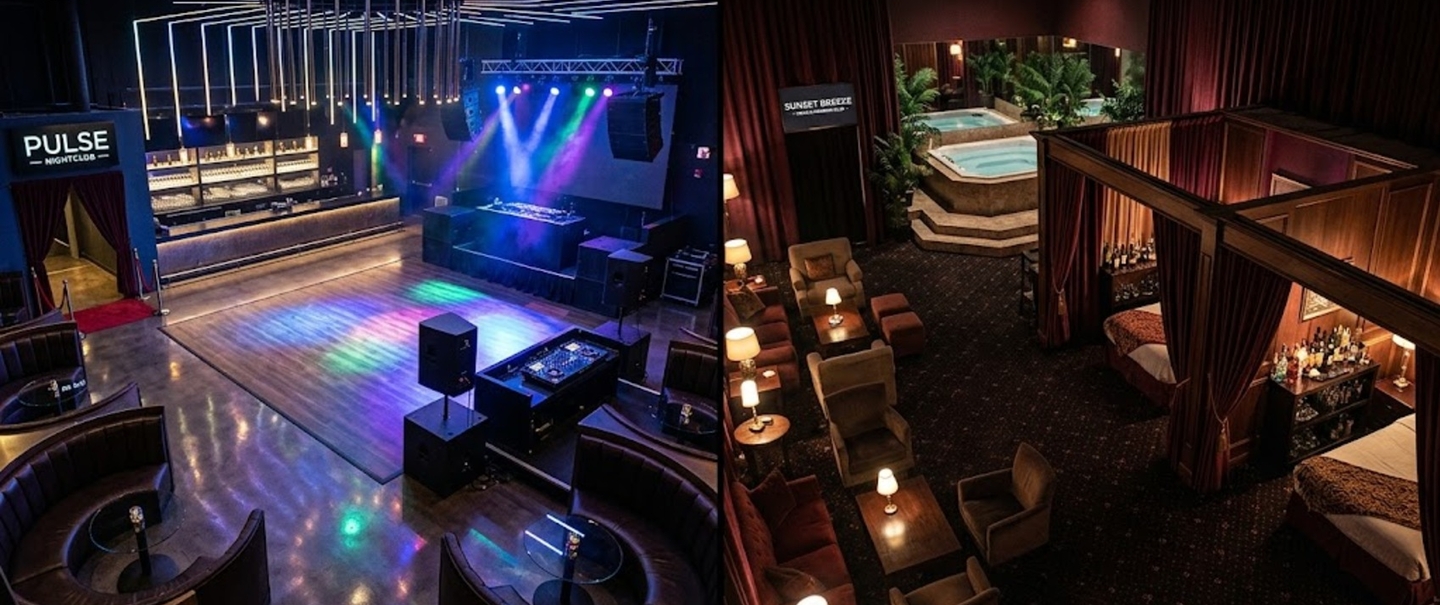
Strip back the mythology and the nightclub is a bar with a dance floor and a cover charge. The economics run on alcohol sales, and everything else is infrastructure to sell more drinks. The variation between venues is mostly about who sets the price and what story the pricing tells.
At Berghain in Berlin, entry is €25-€30 cash at the door. The bouncer might turn away 80% of the queue, not because of dress code failures but because of something harder to name. The design intention inside is total dislocation: no clocks, no natural light, the Function-One system running at around 108 dB. Berghain is not a place people go to meet people. It's a place people go to disappear into sound for twelve hours.
Fabric in London runs £10-£40 advance and £20-£40 at the door. It closed for six months in 2016 after two drug deaths and reopened with welfare teams, a WhatsApp line for people having difficult nights, and protocols other clubs have spent years copying. The point, again, is the music.
Then there's LIV Miami at the Fontainebleau: women pay $60-$80 cover, men pay $100, table minimums start at $1,000 and reach $6,000 or more, and a single bottle costs $700-$900 before the 20-38% tax-and-gratuity stack. Hï Ibiza on a Black Coffee Saturday is €100 to walk in. These are venues built around being seen spending, and the music is wallpaper.
What every nightclub shares: a licensed bar as the primary revenue model, equal entry regardless of relationship status, and no explicit social contract beyond "don't be a problem."
What a Swingers Club Actually Is
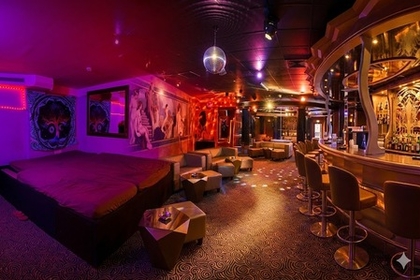
A lifestyle club (the preferred term in the community) is a private members venue where consenting adults gather to have or watch sex. The social contract is explicit, enforced, and physically posted on the walls. What you do with the night is still up to you.
Look at the pricing table at Caligula NY in Queens. Saturday night: $75-$95 per couple, $25 for a single woman, and then the column for single men says "NOT admitted." Not "$200 with a surcharge." Just: not admitted. Trapeze Atlanta is the same on Saturdays. That column tells you more about how these venues work than any paragraph of explanation: they're managing the room's gender balance structurally, not through vibes.


The consent framework is physical, not just policy. Club Privata in Portland posts its rules on signage you pass on arrival: "Ask once and only once." "Closed doors or curtains should never be opened." At Killing Kittens in London, the operating principle isn't "no means no." It's "yes means yes." Every interaction requires enthusiastic consent, and that distinction matters more than it might sound.
Most American lifestyle clubs are BYOB. Caligula is. Trapeze Atlanta is, and it includes a full dinner buffet and breakfast in the $100 Saturday nightly fee, which reliably disorients people used to nightclub economics. The BYOB model isn't casual hospitality. It's a legal strategy: a venue that combines alcohol service with permitted sexual activity faces compounded regulatory exposure in most US states. No bar, no problem.
The physical environment surprises most first-timers. Private rooms, some curtained and some doored, sit alongside open social areas where people talk and watch. The bathrooms are impeccably clean, with that faint sting of clinical disinfectant that signals a deliberately maintained space.
Les Chandelles in Paris runs €60-€120 per couple depending on the night. The gap between Sunday (€60) and Saturday (€120) isn't inflation, it's curation. Saturday management actively turns away couples who don't fit the aesthetic. France classifies clubs libertins as ordinary licensed businesses with no special adult-venue permit, so Les Chandelles sits on a Louvre-adjacent street with valet parking on weekends and €30 glasses of wine inside.


Killing Kittens charges £60-£75 per London event for members. Hedonism II in Jamaica runs $240-$490 per person per night all-inclusive, less a club visit and more a vacation organized around the lifestyle.
Do you have to participate? No. Voyeur-friendly is standard across the category. Paris alone has 22 listed swinger clubs, from curious first-timers to experienced regulars. Nobody is obligated, and any venue worth attending enforces that. It doesn't just state it on a website.
Night Club vs. Swingers Club: Side by Side
| Night Club | Swingers Club | |
|---|---|---|
| Entry cost | €10-€100+ (DJ and city dependent) | $40-€120/couple; tiered by night |
| Single men | Standard cover, same access as anyone | Restricted or banned on peak nights |
| Alcohol | Full licensed bar; primary revenue source | BYOB in most US venues; licensed in France/EU |
| Social risk | Anonymous in a crowd | Smaller room; regulars often know each other |
| Consent norms | Informal and variable | Explicit, posted, and actively enforced |
| What you're paying for | Music, atmosphere, status | Company, permission, safety infrastructure |
Where the Line Blurs
The sharpest "what is this place, actually" example is KitKatClub in Berlin.
Legally, KitKatClub is a licensed commercial nightclub. It has resident DJs, a dance floor, a bar, a real sound system. Open sexual activity is normalised throughout the venue on Saturday nights. The dress code requires latex, leather, PVC, or fetish gear; jeans and white sneakers are banned. You can arrive in ordinary clothes, change at the cloakroom, and leave the same way. German law treats sexual activity between consenting adults as an attendee choice rather than a commercial service the venue provides, so KitKatClub operates under a standard entertainment licence, no swingers-club premium attached.
You would struggle to replicate this in most American cities. The Berlin nightclub scene operates in a legal and cultural context that other countries haven't built, and KitKatClub is at the far edge of it.
SNCTM hosts erotic masquerade events in New York with memberships starting at $15,000 per year and single-event tickets at $1,500-$8,000 per couple. It's not a nightclub and not a traditional swingers club. Both Caligula and SNCTM operate in New York. One charges $55/couple on a Wednesday; the other starts at $15,000/year. The lifestyle world is not a monolith.
The more useful question isn't always which category a venue falls into. It's: what social contract is posted on the wall?
The Numbers That Shift the Frame
The price inversion
€120 to enter Les Chandelles on a Saturday (one drink included) is roughly the same as a standard Hï Ibiza ticket on a peak night. One LIV Miami table minimum ($1,000) would cover Trapeze Atlanta couples entry for about ten weeknights, dinner and breakfast included each time.
Legal category
US swingers clubs are classified as Sexually Oriented Businesses with zoning restrictions, typically 500-1,000 feet from schools, churches, and residential zones. Nightclubs face none of this.
Demographics
Lifestyle clubs skew 30s-50s and heavily towards couples. Single women are often free or heavily reduced. KitKatClub and Berghain skew queer, 25-45. LIV Miami skews 21-35 and influencer-coded.
BYOB is a legal strategy
Most US states create compounded regulatory liability for venues combining alcohol service with permitted sexual activity. Removing the bar removes the licensing problem.
Scale
SexAdvisor lists 752 swinger clubs globally, with an estimated 3,000 or more operating across North America.
Which One Is Right for You
If you want to dance until 7am and remember a set for years, go to Berghain, Fabric, or Hï Ibiza. These venues do what they're designed to do.
If you and a partner want to explore the lifestyle (watch, socialise, participate at whatever level you're comfortable with), start with a weeknight or Sunday entry at a well-regarded venue. The room is less pressurised, existing regulars are better at welcoming newcomers than the mythology suggests, and you'll get a realistic read on whether this is something you want to pursue. Berlin has 15 listed lifestyle venues on SexAdvisor. Paris has 22. Start with a city-level browse before committing to any specific venue.
If you're a single man hoping the swingers club is an easier route to willing partners: it isn't, and this isn't a moral position. Caligula won't admit you on Saturday. Trapeze won't see you on weekends. Killing Kittens requires women to lead the membership application; men cannot join independently at any price. These venues built their model around a gender balance that a solo male presence complicates, and they've solved for it directly through pricing and door policy.
Here's what nobody says plainly: nightclubs are poor environments for the one thing most people claim they're going to nightclubs for. Conversation is impossible at 108 dB. Approaching strangers in a dark crowded room involves an ambiguity that simply doesn't exist at a lifestyle club where the stated purpose is clear. A well-run swingers club is, paradoxically, a better place to meet people who want to meet you.
Conclusion
Both work. Neither is better in the abstract. The nightclub delivers music, anonymity, and atmosphere. The lifestyle club delivers a clearer social contract and a room where everyone's intentions are stated upfront. Pick by what you actually want, not by what sounds less intimidating to type into a search bar.
 Happy Ending Massage vs Escort
A happy ending massage ends with the masseuse bringing you to orgasm by hand. An escort is a person you book for their time, with sex as the understood point. Nearly everything else, the price, the booking, the legal footing, follows from that. What each costs in Berlin, London and Amsterdam, and which one to book.
1 month ago
Comparison
Happy Ending Massage vs Escort
A happy ending massage ends with the masseuse bringing you to orgasm by hand. An escort is a person you book for their time, with sex as the understood point. Nearly everything else, the price, the booking, the legal footing, follows from that. What each costs in Berlin, London and Amsterdam, and which one to book.
1 month ago
Comparison
 Adult Travel Guide: Berlin, Prague, Amsterdam & Vienna Compared
Berlin, Prague, Amsterdam and Vienna compared for adult travel: Real prices, named venues, legal status, and what each city actually does best.
2 months ago
Comparison
Adult Travel Guide: Berlin, Prague, Amsterdam & Vienna Compared
Berlin, Prague, Amsterdam and Vienna compared for adult travel: Real prices, named venues, legal status, and what each city actually does best.
2 months ago
Comparison
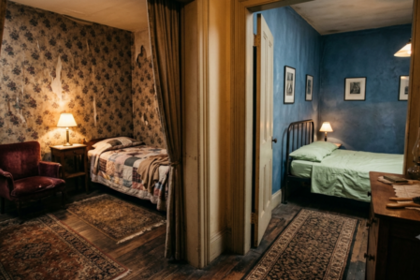 Comparing Brothel Laws Across Europe
Four legal models, twelve countries, and a map that can change in a single train ride. A 2026 country-by-country guide to where brothels are legal, licensed, or criminalised across Europe - and what each model actually means for buyers and workers.
3 months ago
Comparison
Comparing Brothel Laws Across Europe
Four legal models, twelve countries, and a map that can change in a single train ride. A 2026 country-by-country guide to where brothels are legal, licensed, or criminalised across Europe - and what each model actually means for buyers and workers.
3 months ago
Comparison
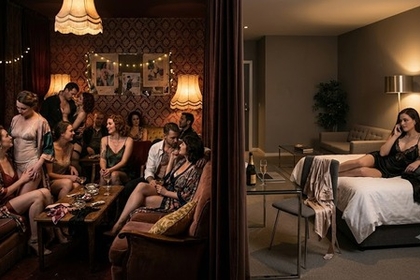 Brothels vs. Escort Agencies: Which Experience Is Right for You?
One brings you to the experience, the other brings it to you. We compare brothels and escort agencies head-to-head on cost, privacy, variety, safety, and the law - so you can pick the one that actually fits how you like to play.
4 months ago
Comparison
Brothels vs. Escort Agencies: Which Experience Is Right for You?
One brings you to the experience, the other brings it to you. We compare brothels and escort agencies head-to-head on cost, privacy, variety, safety, and the law - so you can pick the one that actually fits how you like to play.
4 months ago
Comparison